
Tumor
CAR-T Cell Therapy:From Hematological Tumors to Solid Tumors, Global Market, Treatment Costs and Advantages in China
——2026 Global CAR-T Treatment Development and Cross-border Medical Guidelines
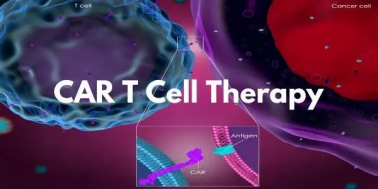
1. What isCAR-T? Why it is called a major breakthrough in cancer treatment ?
In the past few decades, cancer treatment has relied heavily on surgery, chemotherapy, radiotherapy, targeted therapy, and immunotherapy. Today, a technology that can use a patient's autoimmune cells to attack cancer is changing the treatment of some refractory diseases. This isCAR-TCell Therapy(Chimeric Antigen Receptor T-cell Therapy, Chimeric antigen receptorTCell Therapy). . .CAR-TThe rationale is that it is extracted from the patient's bloodTLymphocytes, are genetically engineered in the laboratory to express chimeric antigen receptors that recognize specific tumor antigens(CARAfter culture and expansion, these modified immune cells are then infused back into the patient. These cells are like specially trained immune warriors, which can actively recognize and attack cancer cells carrying corresponding antigens.
Routine itselfCAR-TTreatment usually consists of five steps:
- Patient Assessment & Cell Collection: Confirmation of indications, organ function, and disease status, Obtained by apheresis techniqueTcell.
- Cell Transformation & Expansion: Genetic modification, culture, and release testing are completed in a production facility that meets quality standards.
- Necessary bridging treatment: Controls tumor progression during cell production.
- Chemotherapy andCAR-TReturn Transfer: ForCAR-TCell expansion creates conditions.
- Adverse reaction monitoring and long-term follow-up: Focus on monitoring cytokine release syndrome, neurological toxicity and infection.
CAR-TThe most important feature is that some patients may achieve remission for years or even longer with a single cell infusion. However, this does not mean that all patients will be cured. The efficacy depends on the type of disease, the timing of treatment,CAR-Tproducts and the patient's own condition.
2. What diseases are acceptableCAR-TTreatment?
1. Hematological malignancies: The most mature application area at present
CAR-TFirst of all, inBSuccessful in cell-derived hematological tumors.As of2026Year,United StatesFDAApproved7ModelsCAR-TProducts , Approved products in mainland China9Style.There are differences in the indications, number of treatment lines and age limits of different products.
|
Types of diseases |
Main Targets |
Clinical application status |
|
BCellular Acute Lymphoblastic Leukemia(B-ALL) |
CD19 |
Approved, for specific relapsed and refractory patients |
|
diffuseBCellular Lymphoma(DLBCL) and part largeBCellular lymphoma |
CD19 |
Approved , Some patients can be used in the second line |
|
Follicular Lymphoma(FL) |
CD19 |
Approved |
|
Mantle cell lymphoma(MCL) |
CD19 |
Approved |
|
Chronic Lymphocytic Leukemia(CLL/SLL) |
CD19 |
The United States has approved it for use in select patients |
|
Marginal zone lymphoma(MZL) |
CD19 |
The United States has been approved for indications |
|
Multiple Myeloma(MM) |
BCMA |
Approved , Some indications are expanded to earlier treatment lines |
For partially relapsed refractoryBPatients with cellular lymphoma,CAR-TIt can achieve deep relief that is difficult to obtain with traditional salvage treatments. The National Cancer Institute introduces , in some largeBCellular lymphoma in clinical research30%patients who survived five years of treatment and had no evidence of disease. butCAR-TNot for all hematologic tumors. Acute myeloid leukemia(AML), mostTDiseases such as cellular malignant tumorsCAR-TTreatment is still based on research, has not yet been formed andBCell tumors are an equally mature conventional treatment system.
2. 2026yearly6monthly22The National Food and Drug Administration of China approved the listing of Shurikioluncel, becoming the world's first approved drug for solid tumors.CAR-Tproducts.
For a long time,CAR-TIt is relatively difficult to develop in solid tumors. Reasons include heterogeneity of tumor targets, potential toxicity in normal tissues, immunosuppression of the tumor microenvironment, andCAR-TCells have difficulty fully entering solid tumors.
2026yearly6monthly22Japan and the National Food and Drug Administration of China approved ShurikioluncelSatricabtagene autoleucel) Listing , became the world's first approved for use in solid tumorsCAR-Tproducts.Its official indications are:Claudin18.2(CLDN18.2) positive,HER2Negative advanced gastric cancer or gastroesophageal junction adenocarcinoma that has failed at least second-line therapy,This is an important breakthrough. Published in2025The randomness of the LancetⅡInclusion of the study156patients. Intention to treat the population,CAR-TThe median progression-free survival of the group was3.25months • The control group is1.77months • Risk ratio of disease progression or death0.37Research provesCAR-TClinical Value in Patients with Specific Advanced Gastric Cancer, In addition to Gastric Cancer,Solid tumors being explored in ChinaCAR-TAlso includes:
Keji PharmaceuticalCT011,GPC3Targeting,Targeting Hepatocellular Carcinoma;
YimufengIMC002, TargetsClaudin18.2,For those who have failed at least second-line therapyCLDN18.2Positive stomach/Gastroesophageal junction adenocarcinoma;
Yimiao ShenzhouIM96,GC-C(GUCY2C)Target, Targets advanced gastroesophageal junction adenocarcinoma and gastric adenocarcinoma,HER2Positivity is also exploring.
SibimanC-CAR031(AZD7003):GPC3Targeted armor typeCAR-T,IITResearch36Cases of advanced liver cancer,Objective response rate(ORR)44.4%,Disease control rate(DCR)91.7%, Median overall survival14.2Months,2026yearly7The moon climbs to the top of the "Monthly Summit"Nature" is officially published.
LYL273:GCC( Guanylate cyclase-C) Targeting itself CAR-T,United States I Phase Clinical , Refractory Metastatic Colorectal CancerORR 67%,DCR 83%. . .
Bo Sheng JiTAA6-CAR-T: TargetingCD276(B7-H3)CAR-T, Targets solid tumors such as recurrent neuroblastoma.
Multiple teams are doing mesothelin,MUC16Targeted ovarian cancerCAR-T,Pancreatic cancer, lung cancer, and biliary tract cancer all have early clinical exploration.
If you are a patient with solid tumors such as advanced liver cancer, ovarian cancer, pancreatic cancer, etc., after the failure of conventional treatment, do not only focus on the drugs that have been marketed, and clinical trials may be the only ones that can be used at present.CAR-TThe way of the
3. Autoimmune Diseases:CAR-TEntering a new medical field
CAR-TNot only can they attack cancer cells, but may also be used to clear abnormalities that lead to autoimmune responsesBCells, to achieve a certain degree of immune system reconstruction. Current research directions include systemic lupus erythematosusSLE), lupus nephritis, systemic sclerosis, myasthenia gravis, multiple sclerosis, neuromyelitis optica spectrum disease, and partial autoimmune cytopenia. Relevant clinical studies have been carried out in China, Germany, and the United States. Some patients with refractory autoimmune diseases are receivingCAR-TAfter achieving deep remission, there is no need to continue to use immunosuppressive drugs for a period of time.
2025yearly9Chen Zhu's team from the First Affiliated Hospital of the University of Science and Technology of China published the world's first in vivo in the New England Journal of Medicine.CAR-TTreatment of Systemic Lupus Erythematosus Study(HN2301),5Cases are refractorySLEPatients who have not been pre-treated3All disease activity scores decrease after months;
2026yearly1Published in the New England Journal of Medicine by Shi Jun and Xiong Haiqing from Peking Union Medical College HospitalCD19 CAR-TTreatment of Autoimmune Hemolytic Anemia Research;
2026yearly5Monthly ⼌ Beijing Gaobo Hospital Pan Jing team announcedCD19 CAR-TTreatment of children and adultsSLEThe1/2Period data,Most patients achieve deep remission after stopping immunosuppressants;
2026yearly7Monthly for Shanghai Children's Medical CenterCD19/CD22Double targetCAR-TTreatment of children with severe lupus and thrombocytopenia, follow-up20Months of drug discontinuation.
III.2026Major countries in the worldCAR-TMarket Status
CAR-TThe cost of not only looking at“How much does a needle cost”What really needs to be calculated is:Total Medical Costs= Pre-treatment Assessment + Cell Harvest and Manufacturing + Bridging Therapy + Clearing Chemotherapy +CAR-Tinfusion + inpatient observation + complication management + early follow-up.International patients also need to pay for translations, accommodation, transportation, visas, and escorts. Mature markets such as the United States, Europe, and Japan,CAR-TThe cost of treatment is very high; China is actively developing local products, expanding supply and exploring ways to reduce treatment costs. The following prices are uniformly divided into drug prices, actual medical costs and foreign patient budgets. Due to the lack of a unified public quotation for foreign patients in different countries, some of the amounts can only be used for preliminary financial planning.
Comparison of all self-paid costs in major countries
|
Countries |
International patients are paid for at their own expense |
|
China |
Routine single treatment in general or international medical wards , can be initially treated according to$165,000–$270,000Planning ; Private International Medical or Complex Cases May Be Higher |
|
United States |
About60Ten thousand—100$10,000 as a reference for high-cost medical budgets ; Complex cases may exceed100$10,000 |
|
Germany |
Disclosure of the approximate cost of medical care in the country$376,000Foreign patients should be subject to the hospital's quotation |
|
Japan |
Home countryCAR-TInfusion stage medical cost reference$222,000–$279,000The actual fees for foreign patients must be confirmed separately |
Special advantages in the Chinese market
China's advantages are not only in terms of price, but also include local product research and development, cell manufacturing capabilities, research layout of different targets, and clinical experience accumulated by some leading medical institutions. At present, commercialized products include Yikaida, Benoda, Fukosu, Yuanruida, Saikaize, Hengkailai, Pridekai and Kailimei, etc. It is particularly noteworthy that China has taken the lead in achieving solid tumorsCAR-TCommercialization is an important competitive advantage for China in the global cell therapy field.
International Patient : Cross-border Business Insurance is a Key Uncertainty
For patients from the United States, Europe, the Middle East and other countries,If they take the initiative to go to China to receiveCAR-TTreatment , Original insurance may not be covered. Even if the patient has purchased a high-end international commercial medical insurance,, it is necessary to confirm
- Whether it covers the disease corresponding to the patientCAR-Tproducts.
- Whether treatment in designated hospitals in China is allowed.
- Whether it covers cell production, chemotherapy, hospitalization and complication treatment.
- Whether prior written authorization is given for planned cross-border treatment.
- Whether the patient needs to pay in advance before applying for a claim.
International patients should prepare funds at their own expense until they have received official written confirmation from the insurance company.
4. How to choose international patientsCAR-TCountries of Treatment?
Price is important, butCAR-TCell therapy that is high-risk and requires specialized center management cannot be selected according to general medical tourism programs. Patients need to first clarify the pathological diagnosis, the number of previous treatment lines, antigen expression, disease progression rate, and organ function to determine whether they meet the approved indications. Subsequently, attention should be paid to the cell therapy qualifications, cell preparation and release system, severe treatment capabilities, post-infusion monitoring conditions, and follow-up connection with medical institutions in the patient's home country.
CAR-TCytokine release syndrome may occur(CRS)、Immune effector cell-associated neurotoxicity syndrome(ICANSComplications such as severe infection and persistent cytopenia. International patients usually need to stay near the treatment center for several weeks. Therefore,Truly valuable cross-border medical services are not only about helping patients find a company that canCAR-THospitals should also provide pre-treatment screening, international medical record evaluation, product and treatment plan comparison, cost transparency, risk communication and cross-border follow-up management.. . .
Conclusion
CAR-TIt has developed from a cutting-edge experimental technique to an important treatment option for partially refractory hematological tumors.2026The year officially entered the era of commercialization of solid tumors. China has developed rapidly in local research and development, indication innovation and cell therapy system construction. For international patients, the most worthy comparison is not the simple drug price butAvailable approved treatment options, real clinical benefits, treatment safety, full medical costs, and how much insurance can ultimately payThe future , with moreCAR-TProduct launches, reduced cell manufacturing costs, and improved cross-border medical service systems are expected to benefit patients in more countries.
Information as of2026yearly10monthly28This article is a review of medical and market information, and does not constitute an individualized treatment recommendation. All product indications, hospital eligibility, patient fees and insurance payment coverage should be subject to the official documents at the time of treatment.
References
https://www.cancer.gov/about-cancer/treatment/research/car-t-cells?utm_source=chatgpt.com
https://www.sciencedirect.com/science/article/pii/S0140673625008608?utm_source=chatgpt.com
The State Food and Drug Administration approved the listing of Surekiolensel injection
What to do next
For a conversation about your situation, contact a coordinator through the consultation form. Do not send medical records through the public form.